
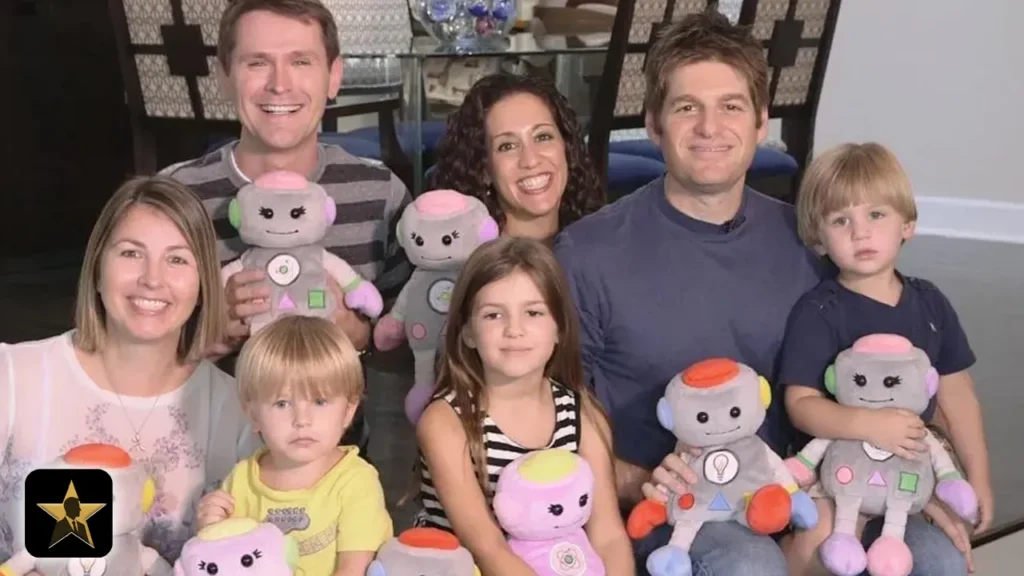
TROBO is a unique STEM toy designed to make learning fun for young children. It is a huggable robot that tells interactive stories and teaches science, technology, engineering, and math. Parents loved it for its educational value and playful design. The toy also connects with tablets for personalized learning experiences.
The founders, Jeremy Scheinberg and Chris Harden, created TROBO to answer their kids’ endless questions about the world. They wanted a toy that was both fun and educational. TROBO gained attention for its innovative approach to STEM education. Its appearance on Shark Tank brought it even more fame and curiosity from buyers.
Origins and Founding of TROBO
TROBO was conceived by two Orlando-based engineers and fathers, Jeremy Scheinberg and Chris Harden, who were frustrated by the lack of interactive STEM toys for their kids. Scheinberg, an engineering graduate from the University of Pennsylvania, brought experience from Disney, NBC, Universal, and Lego theme park projects. Harden, previously Development Director at EA Sports, added a gaming and interactive design perspective.
The founders were inspired by their children’s constant curiosity—questions like, “Why is the sky blue?” or “How does an iPad work?” fueled the vision for a toy that could combine education and emotional engagement. Early development was supported through a successful Kickstarter campaign, raising over $61,000, demonstrating strong market interest in a STEM-driven plush robot.
Also Read: Fat Shack Shark Tank Update
What is TROBO? Features and Functionality
TROBO is a 12-inch plush robot designed for children aged 2-5. It connects via Bluetooth to iOS or Android devices, delivering interactive STEM stories directly to kids. The toy reads aloud from the app, offering personalized experiences by including the child’s name and avatar.
The toy’s content spanned science, technology, engineering, and math, and included games like Hot Potato and Hide-and-Seek, along with quizzes to reinforce learning. While TROBO initially came with five free stories, additional content was available for $4.95 per story. The combination of personalized storytelling, interactive gameplay, and huggable design made TROBO a standout in the early STEM toy market.
TROBO on Shark Tank: Season 7
TROBO appeared on Shark Tank Season 7, Episode 23 on April 29, 2016, with the founders seeking $100,000 for 10% equity. Pre-pitch, TROBO had sold 600 units, generating $166,000 in revenue from boutiques and trade shows.
During the pitch, the founders demonstrated TROBO’s personalized features, including plush robots embroidered with the sharks’ names. However, the Sharks raised concerns:
- Mark Cuban questioned the content quality.
- Kevin O’Leary criticized the $59.95 price point and competition from free educational apps.
- Daymond John noted the saturated toy market.
- Lori Greiner was concerned about retailer interest.
- Barbara Corcoran exited early.
Ultimately, Robert Herjavec offered $100,000 for 33% equity, contingent on a DreamWorks licensing deal. After negotiations, the founders countered at $166,000 for 33%, which Herjavec accepted.
| Robert Herjavec | Agreed to invest $166,000 for 33.3% equity |
| Kevin O’Leary | Declined to make an offer |
| Lori Greiner | Did not show interest or make an offer |
| Daymond John | Passed on investing in TROBO |
| Mark Cuban | Chose not to invest in the company |
Founders of TROBO: Jeremy Scheinberg & Chris Harden
Jeremy Scheinberg and Chris Harden, both based in Orlando, Florida, are the creative minds behind TROBO. Scheinberg is an engineering graduate from the University of Pennsylvania with experience working at Disney, NBC, Universal, and Lego. His background in theme park rides and interactive entertainment gave him unique insights into designing engaging experiences for children.
Chris Harden, on the other hand, was a Development Director at EA Sports, bringing expertise in gaming and digital content creation. Together, they combined their skills to develop a toy that was both educational and entertaining. Their shared experience as fathers inspired them to create something that would spark curiosity in young minds.
The idea for TROBO came directly from their children’s endless questions about the world. Scheinberg and Harden wanted a toy that could answer these questions in an interactive way, making STEM subjects exciting. Their vision was to create a product that combined storytelling, personalized learning, and emotional bonding with a toy robot.
TROBO Shark Tank Update: Post-Deal Challenges
Despite the deal, the promised $166,000 never materialized due to the failure to secure the DreamWorks partnership and strict legal contingencies. However, the Shark Tank exposure significantly boosted TROBO’s visibility. Media outlets like People Magazine, TechCrunch, and Popular Science covered the toy, and TROBO was named Best of Toy Fair 2015 by Popular Science.
Sales initially surged post-show, with many units selling out. Yet, without the investment capital, scaling production, app development, and marketing proved difficult. The founders struggled to expand beyond direct online sales and small boutique partnerships.
TROBO After Shark Tank: Growth and Limitations
Post-Shark Tank, TROBO attempted several strategies:
- Expanded online sales through its website mytrobo.com and Amazon.
- Priced toys between $200-$400 due to limited stock.
- Explored partnerships with schools, libraries, and retailers like Target and Walmart.
Unfortunately, the toy faced significant market challenges:
- High production costs and app maintenance expenses.
- Strong competition from free or low-cost STEM apps.
- Retail reluctance due to price and scalability issues.
TROBO Net Worth and Financial Performance
Before Shark Tank, TROBO had modest revenue of $166,000 from Kickstarter and early orders. The post-show surge provided some additional sales, but exact revenue figures were never disclosed. Operational costs, including manufacturing, software updates, and content creation, were high, limiting profitability.
As of 2025, the trobo net worth is $0. The company permanently closed in 2017, with no acquisitions, funding rounds, or revival plans. Its post-Shark Tank valuation had peaked around $498,498 based on the proposed Herjavec deal, but without capital and partnerships, the company could not sustain growth.
TROBO’s Business Model
TROBO operated as a lean startup focusing on hardware-software integration for STEM education. Revenue streams included:
- Toy sales
- Paid story content ($4.95 per additional story)
- Planned subscription model (never fully launched)
The emphasis on educator-approved content, personalization, and interactive learning distinguished TROBO from other plush toys. However, challenges in manufacturing, licensing, and retail distribution limited its scalability.
Lessons from TROBO’s Journey
- Importance of Securing Strong Partnerships: The Herjavec deal hinged on DreamWorks licensing, which never materialized.
- Balancing Cost and Accessibility: High production costs and premium pricing limited market penetration.
- Adapting to Competitive Landscapes: Free or cheaper apps posed challenges to subscription-based educational toys.
- Leveraging Media Exposure: Shark Tank coverage gave TROBO visibility, but it could not convert awareness into sustainable revenue.
Also Read: Hairy Grabster Shark Tank Update
TROBO Today Update
As of 2025, TROBO is no longer available for purchase. The company permanently closed in 2017 after facing high costs and market challenges. Its website is inactive, and official support for the toy has ended. Only a few used units occasionally appear on resale platforms like eBay.
Despite closing, TROBO left a mark in the educational toy market. Its innovative STEM approach inspired other interactive learning products. The founders shared their experiences in a 2022 book about the toy startup journey. TROBO remains a well-known example of a creative but short-lived Shark Tank venture.
Why TROBO Failed Despite Shark Tank Exposure
TROBO gained national attention after its Shark Tank appearance, which increased visibility and initial sales. However, the deal with Robert Herjavec fell through due to the inability to secure the required DreamWorks licensing. Without the promised investment, the founders struggled to scale production, develop the app, and expand distribution to larger retailers.
High production costs, competition from free educational apps, and a limited market further hindered growth. Despite media coverage and initial excitement, TROBO could not sustain long-term sales. Eventually, the company ceased operations in 2017, leaving it unavailable to consumers.
- The Shark Tank investment deal collapsed due to licensing contingencies.
- High production and app development costs made scaling difficult.
- Competition from free or cheaper STEM apps reduced market appeal.
- Retail partnerships with major stores never materialized.
- Limited funding restricted marketing and expansion efforts.
- Price point was considered high for the target market.
- Operational challenges prevented sustainable growth.
Final Thought About TROBO
TROBO was an innovative toy that combined fun and STEM learning for young children. Its Shark Tank appearance brought it attention, but business challenges led to its closure. While it is no longer available, TROBO inspired new ideas in educational toys. The story of TROBO highlights both creativity and the risks of startup ventures.